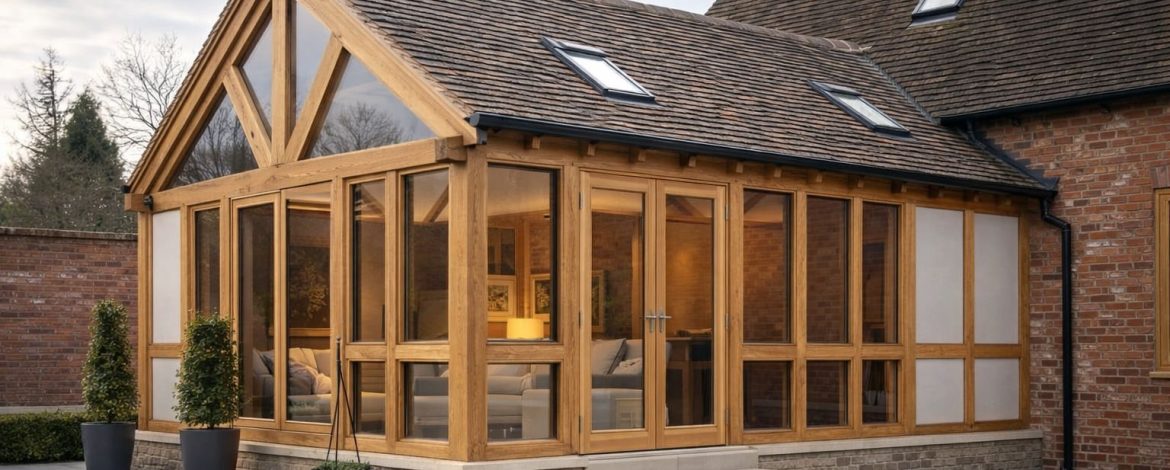
Building in some of the most beautiful parts of the country comes with a certain responsibility. If you’re fortunate enough to own a property in an Area of Outstanding Natural Beauty (AONB) or within a conservation area, you’ll already know that any changes to your home are carefully scrutinised.
And while this can feel restrictive at first, it’s not necessarily a barrier. In fact, when approached correctly, it can work in your favour.
Because when it comes to sympathetic development in protected landscapes, oak-framed structures are often not just accepted; they are actively encouraged.
Key Takeaways
- Planning rules in AONBs and conservation areas prioritise materials that complement the natural landscape
- Oak-framed buildings are often viewed favourably due to their traditional construction and appearance
- Local authorities typically support designs that reflect local architectural heritage
- Early engagement with planners significantly improves approval chances
- A well-designed oak structure can enhance both the property and its surroundings
Why Planning is Stricter in Protected Landscapes
There’s a reason areas like the Chilterns, the Malvern Hills, and the Cotswolds are protected. These landscapes are part of the country’s cultural and environmental heritage.
Planning authorities aren’t trying to prevent development altogether. Instead, their role is to ensure that any changes preserve, or ideally enhance, the character of the area.
This means new buildings, extensions, and outbuildings are assessed on more than just function. Materials, proportions, visual impact, and how a structure sits within the landscape all matter.
Modern, highly manufactured materials can sometimes struggle in this context. They can feel out of place, too sharp, too uniform, or simply disconnected from their surroundings.
And this is exactly where oak comes into its own.
Why Oak-Framed Structures Are Often Favoured
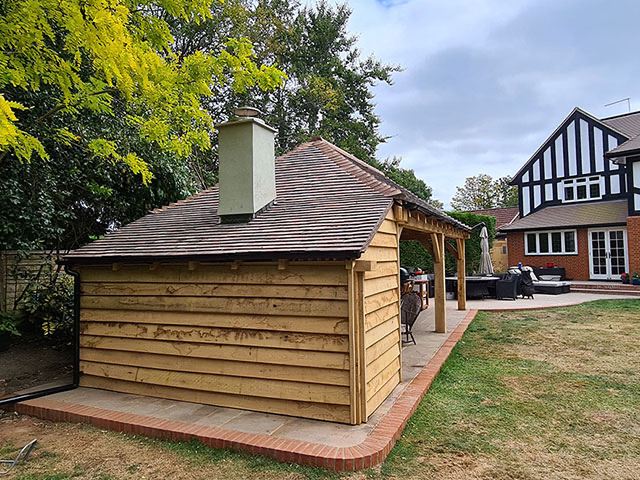
Oak has been used in British construction for centuries. From mediaeval halls to agricultural barns, it is one of the most established and recognisable building materials in the country.
Because of this, planning authorities tend to view oak-framed buildings as inherently sympathetic. They don’t feel like additions imposed onto the landscape. They feel like a continuation of it.
Green oak, in particular, brings a natural warmth and texture that softens the visual impact of a new structure. Even when newly built, it has an honesty to it, exposed joinery, visible grain, and traditional craftsmanship that aligns closely with historic building methods.
Over time, this only improves. As the timber weathers, it develops a soft silver patina that allows the building to settle into its surroundings even further.
In sensitive locations like the Chiltern Hills or the Malvern Hills, this ability to blend rather than dominate is often a deciding factor in planning approval.
A Natural Fit for Listed Buildings and Heritage Settings
If your property is listed or sits within the curtilage of a listed building, the expectations are even higher. Any addition must respect the original structure and avoid detracting from its historic value.
In these situations, oak framing can be particularly effective.
Rather than trying to replicate historic construction in a way that feels artificial, oak structures strike a balance between traditional and contemporary. They acknowledge the past without pretending to be part of it.
This distinction is important. Planning officers and conservation specialists often prefer additions that are clearly modern but sympathetic in material and scale.
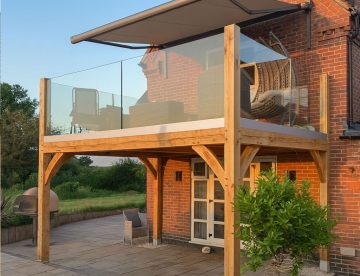
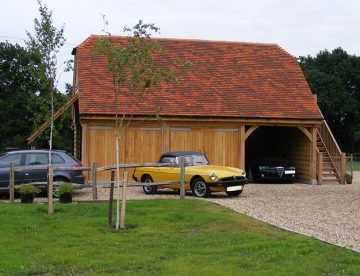
An oak-framed garage, garden room, or extension can achieve exactly that. It complements the existing building without competing with it, and it avoids the visual conflict that can come with more modern construction methods.
Understanding What Planners are Really Looking For
It’s easy to assume that planning decisions are unpredictable, but in reality, most authorities are guided by a consistent set of principles.
They’re looking for developments that:
- Respect the local vernacular architecture
- Use materials that age well within the landscape
- Maintain key views and sightlines
- Avoid visual clutter or overdevelopment
- Enhance the overall setting rather than detract from it
Oak structures naturally align with many of these criteria.
Their proportions tend to be more traditional, their materials are locally appropriate, and their long-term appearance improves rather than deteriorates.
This doesn’t mean approval is guaranteed, but it does mean you’re starting from a strong position.
The Importance of Design and Detail
Even with the right material, design still matters. A poorly proportioned oak building or one that feels oversized for its setting can still face objections. Equally, small details, roof pitch, bay spacing, and infill materials all contribute to how a structure is perceived. This is why having someone who actually understands the local planning quirks saves you a massive headache.
Designing for an AONB or conservation area isn’t just about creating something that looks good in isolation. It’s about understanding how that building will sit within its specific context, the landscape, the neighbouring properties, and the wider architectural language of the area.
For example, in the Chilterns, you might see a preference for softer, more understated forms that echo traditional farm buildings. In the Malvern Hills, where views are often more expansive, careful positioning and scale become even more critical. These nuances can make a significant difference to the outcome of a planning application.
Working with Planners, Not Against Them
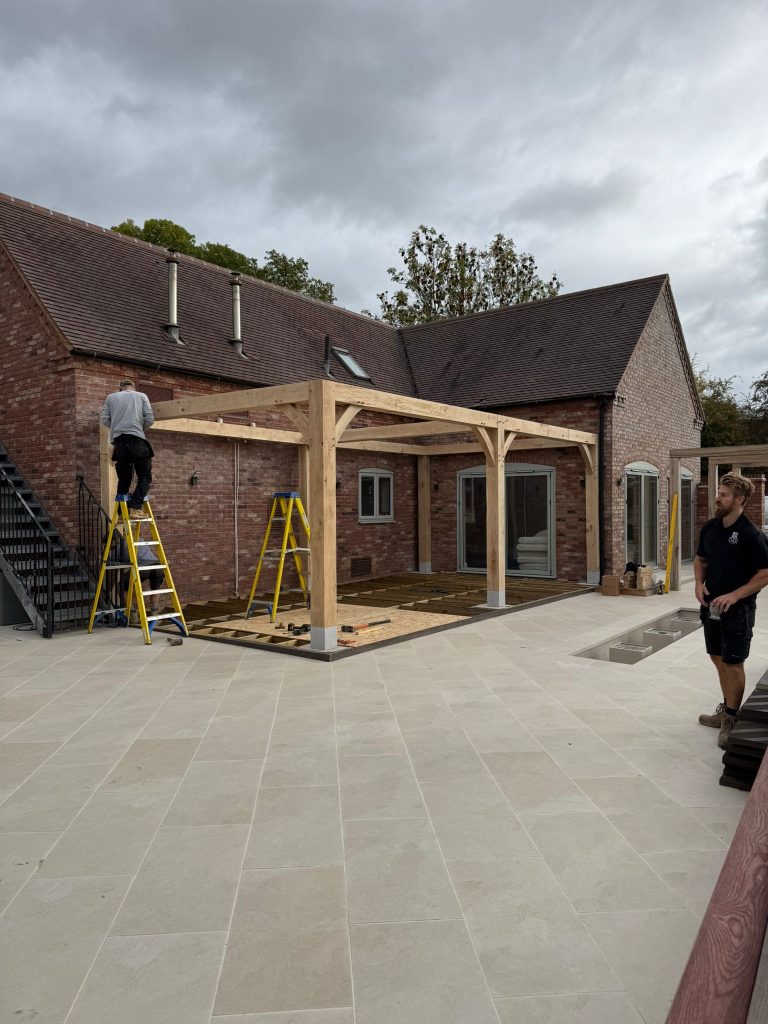
One of the most effective ways to navigate the planning process is to engage early.Rather than submitting a fully developed proposal and hoping for the best, it’s often beneficial to have initial discussions with the local planning authority. Many councils offer pre-application advice services, which can provide valuable insight before any formal submission.
This allows you to refine the design in line with local expectations, addressing potential concerns before they become obstacles.
It also demonstrates a willingness to work collaboratively, which can positively influence how an application is received.
When planners can see that a proposal has been carefully considered and that it prioritises the character of the area, it tends to build confidence in the project.
Long-term Value Beyond Approval
While planning permission is often the immediate hurdle, it’s worth considering the long-term impact of the structure as well.
An oak-framed building doesn’t just meet planning requirements. It enhances the property itself. In rural and protected areas, buyers are often looking for homes that feel connected to their surroundings. Outbuildings that reflect traditional materials and craftsmanship can significantly increase that appeal.
Over time, as the oak matures and the building settles into the landscape, it becomes part of the property’s identity. It doesn’t feel like an addition anymore. It feels like it has always been there.
And that sense of permanence is something that modern materials rarely achieve.
A Considered Approach to Building in Beautiful Places
Strict planning rules can feel like a challenge, particularly when you’re trying to improve or expand your home. But they exist for a reason: to protect the very landscapes that make these properties so desirable in the first place. The key is to work with those principles rather than against them.
By choosing materials and designs that align with the character of the area, the process becomes far more straightforward. And in many cases, oak-framed structures offer exactly that balance of tradition, quality, and visual sensitivity that planning authorities are looking for.
If you’re considering a new oak-framed garage, extension, or outbuilding in a conservation area or AONB, working with an experienced specialist can make all the difference.
At West Midlands Oak Frame, we understand the nuances of designing for protected landscapes and can guide you through the process from concept to approval. Get in touch with our team today.